Hustrulid Technologies · Software · Education · Consulting
Onsite Training · Four Days · At Your Facility
Shaft, shell, end disk, locking assembly — the engineering of a conveyor pulley from first principles to the shop floor, taught to your team at your facility, on your own pulleys.
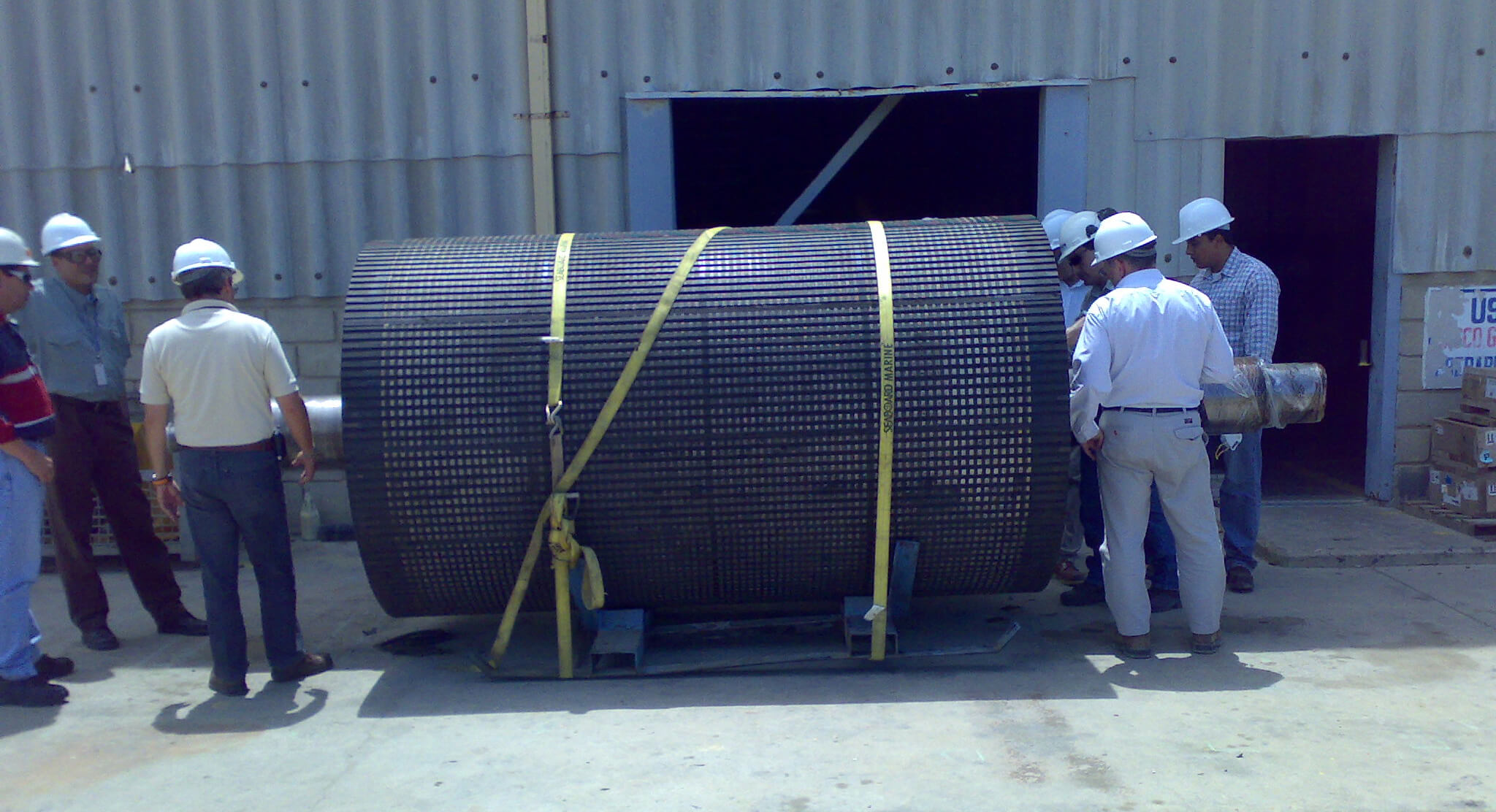
Photo: pulleymaven.com
A conveyor pulley carries the full belt tension every revolution, for years, and when it fails it takes the belt with it. Yet nobody teaches how to design one. The shaft has standards and the welds have codes; CEMA says what a pulley must survive but not how to build it; and the shell, the end disk, the hub and the locking assembly — and how they share the load between them — live in a handful of papers from 1948, 1963 and 1974, and inside each manufacturer, learned the hard way. This is the first course devoted to the pulley — the methods, the standards that agree and the ones that don't, the failures — so your team can design one, defend the calculation, and read a competitor's.
Engineering teams who size shafts, shells, end disks and locking assemblies every week and want the reasoning behind the numbers — including the ones the standards disagree on.
Moving from stock pulleys into engineered class, and needing design capability, a cost model, and a product structure from the first quotation.
Mines, ports, and plants — the people who write the specification, review the vendor's calculation, and answer for the failure.
Day 1
Day 2
Day 3
Day 4
Thirty years in belt conveyors across the USA, Chile, Brazil, Australia and Germany — designing them, running the companies that build and service them, and working out why they fail. BSc, MSc and PhD from the Colorado School of Mines, where he teaches the Belt Conveyor Design short course. Vice chair of the CEMA pulley committee. Founder of Hustrulid Technologies and author of Pulley Maven, Conveyor Maven and Chute Maven.
Participants work in Pulley Maven from Day 1: entering shaft and shell geometry, selecting the locking assembly from the catalogue, running the model at run and maximum tensions, and reading the results — displacements, stresses, the design criteria page, and the model check that proves the FEA balances. By Day 4 the class has costed the same design from its bill of material and operations and searched it for the lowest-cost combination of steel, machining and locking assembly. Bring your own pulleys; the software is provided for the course.
To discuss dates, scope, or whether it fits your engineers, contact Andrew directly. Or take the two-page overview (PDF) with you.
andrew@hustrulid.com · www.hustrulid.com · www.pulleymaven.com · linkedin.com/in/hustrulid